

When democracy is under attack, what can people do? “Stand up, fight back!” goes the street chant. But is that enough?Yes, resisting attacks is important. But defending the status quo alone is a losing strategy when most people don’t like the current system of government. Most people in the United … Read more about Three Emerging Strategies for Renewing Democracy

Nonprofit Rights Are Under Attack. Here’s a 7-Part Playbook to Fight Back.
In moments of national crisis, Americans deserve leadership that protects our freedoms and the rule of law, not leadership that exploits fear to silence civil society. Yet in the charged atmosphere following the heinous assassination of Charlie Kirk, the White House is vowing to use the vast powers … Read more about Nonprofit Rights Are Under Attack. Here’s a 7-Part Playbook to Fight Back.

A Rapidly Growing Network for Democracy Funders
What a difference a couple of decades can make — thanks to an ongoing shift in how funders look at democracy work. Philanthropy for Active Civic Engagement, known by the acronym PACE, launched in 2005 as a small nonprofit with a mission to promote philanthropic investment in civic engagement and … Read more about A Rapidly Growing Network for Democracy Funders

To Protect Democracy, Tell a Better Story About Why It Matters
Authoritarians are remarkably effective at deploying weaponized narratives to undermine democracy. They use stories to shift norms, legitimize autocratic actions, erode trust, and spread misinformation — often under the guise of defending democracy. They imbue their false narratives with clear, … Read more about To Protect Democracy, Tell a Better Story About Why It Matters

Civil Society Is Under Attack. What Is It, Anyway?
…Yet a defense of civil society in the United States is complicated by two paradoxes. The first is that while civil society is often celebrated as one of the central planks of American exceptionalism, it’s also taken for granted. The term itself doesn’t help matters. If vaguely familiar — associated … Read more about Civil Society Is Under Attack. What Is It, Anyway?

2022 PACE Annual Reflection
Talking about civics without going over their heads
Philanthropy for Active Civic Engagement (PACE)’s Civic Language Perceptions Project is a three-year exploration into what Americans think about terms that are commonplace in “professional” civic spaces but perhaps not the everyday word choice of many people– terms like democracy, privilege, and … Read more about Talking about civics without going over their heads
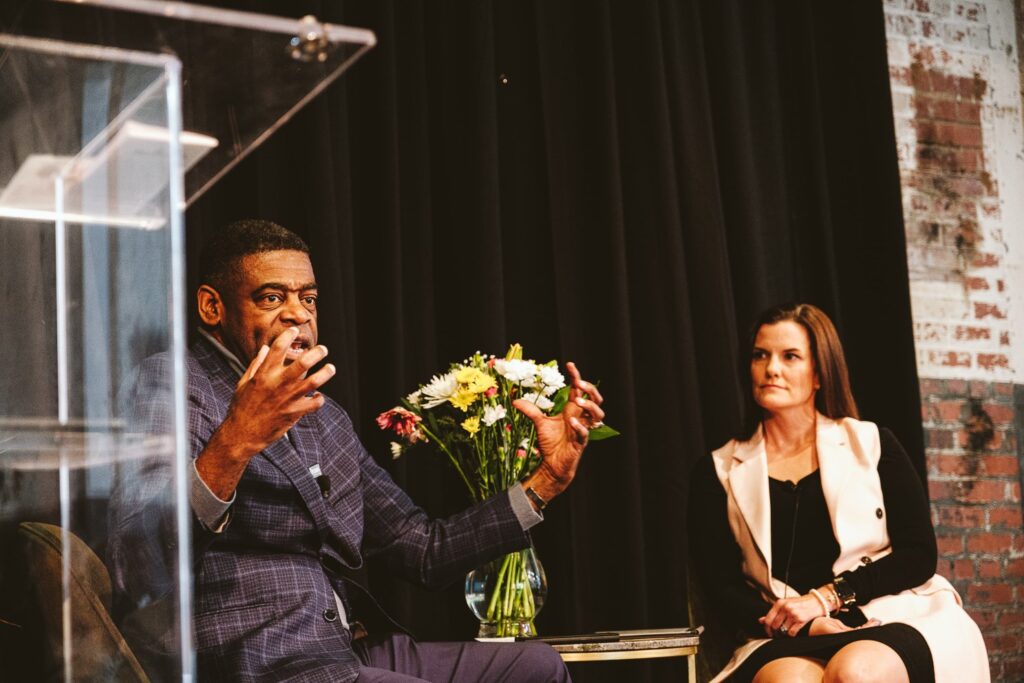
What is the role of philanthropy to get our democracy back on track without being polarizing?
In late March, I (Kristen) co-keynoted the Center for Nonprofit Excellence (CNE)'s Philanthropy Day Summit with Robert Dortch, Jr. from Dortch Group (and the chair of Philanthropy Southeast). The event theme was “Reimagining Philanthropy for a Healthier Democracy” and Robert and I talked about our … Read more about What is the role of philanthropy to get our democracy back on track without being polarizing?

Thank you for listening — here’s the poll results!
Thank you to everyone who listened to the debut episode of my new podcast, Keeping Pace with Kristen, on SoundCloud! I received great feedback on the episode all around, but I especially appreciate the question posed by Ian H. Solomon, Dean and Professor at University of Virginia Frank Batten School … Read more about Thank you for listening — here’s the poll results!

PACE Welcomes New Board Members in 2023
PACE is pleased to announce the appointment of two new members to its Board of Directors: Jen Algire and Lauren Woods. They commenced 3-year terms and will serve through December 2025. Jen Algire is the President and CEO of The Greater Clark Foundation, a place-based foundation in central … Read more about PACE Welcomes New Board Members in 2023

2021 PACE Annual Reflection
Fund Reaches $1M in Grants to Faith-Inspired Initiatives Committed to Democracy and Civic Life
[Washington, D.C. September 14, 2021]— Faith In/And Democracy is a funding and learning initiative led by Philanthropy for Active Civic Engagement (PACE) to explore the ways faith and faith communities support democracy and civic life. Today, PACE announces the expansion of … Read more about Fund Reaches $1M in Grants to Faith-Inspired Initiatives Committed to Democracy and Civic Life